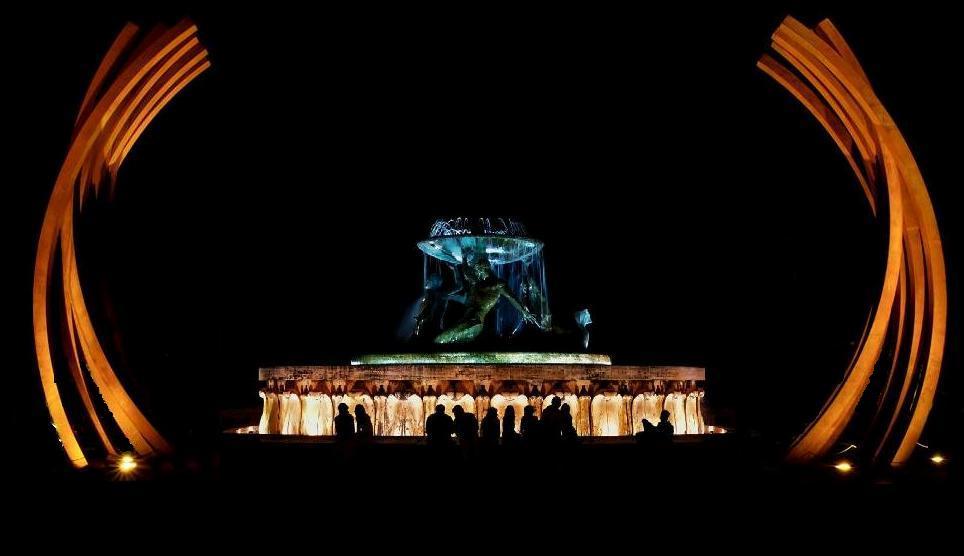
Project proposal for the Triton Fountain (click to enlarge)
After the very famous solo show in the gardens of the Palace of Versailles that attracted 6 000 000 visitors in a period of three months in 2011, it may now be the turn of the Maltese Islands to host the giant steel sculptures of the world famous artist , Bernar Venet.
These steel lines, rusty in colour, give a harmonious effect when combined with the perpendicular lines of the grid composed city of Valletta, as well as the lines of the project by the Italian architect Renzo Piano. The rusty colour of the sculptures in Corten Steel will give a romantic touch to the city with the play of the Maltese sunlight .
The sculptures are to be displayed in various places in the baroque city, the suggested proposals are the Triton square, Pjazza San Gorg, the Waterfront, and Fort Saint Elmo.
This exhibition is being negotiated at the moment by the Parisian art gallery Pierre-Alain Challier, who proudly represents Bernar Venet as well as many other artists of great caliber known all over the globe.
It is an exhibition that will make out of the island of Malta, a flocking spot for art lovers on an international scale.
Malta makes part of the Mediterranean, today considered as the cradle of culture, the cradle that nurtured the Greeks, the Romans and the Egyptians in the ancient times. It is an island rich in history and holds the oldest Megalithic temples in the world. This exhibition will continue to attract the media’s attention on Malta as a cultural center.
Bernar Venet is considered as one of the most important figures on the international art scene. Born in 1941 in Chateau-Arnoux , France , he has lived in New York since 1966, and continues to keep studios in both countries. Venet has exhibited in over 250 solo and 575 group exhibitions around the globe, with more than 200 publications solely dedicated to his work.
In his early twenties, Bernar Venet left his native Nice for New York. A well-articulated intellectual bent and readiness to experiment propelled him to the forefront of what came to be called ‘Conceptual Art’. His artistic circle included such luminaries as Donald Judd, Dan Flavin, Carl André, Robert Indiana and Sol Lewitt.
Venet developed a body of work, steeped in non-art propositions he borrowed from mathematics and theoretical scientists that was the subject of a five-year retrospective at the New York Cultural Center in 1971.
The line, in all its mathematical variations and physical shapes, started to dominate his production in the 70’s. Venet hit his stride with the much more personal ‘indeterminate line’, a departure from the mathematical model. The artist’s approach with his first Indeterminate Lines consisted of realizing the technical and physical feat represented by torsion of these thick beams of steel, opposed to any expressive body movement and any subjective composition of the artist. These rolled unilinear steel lines, without any welded or attached pieces, bear the stigma of the struggle between the steel and the artist. As these years passed, having drawn lessons from his first works, the artist went on to master the process even further, the spontaneous gesture transforming itself into a voluntary one. Venet has acquired an impressive mastery of the technique, which in turn has given rise to a virtual paradox between the indetermination of the object and the maestria with which it is created.
Venet’s work has been exhibited all around the world in galleries and museums, in Europe, the Americas, Asia and New Zealand.
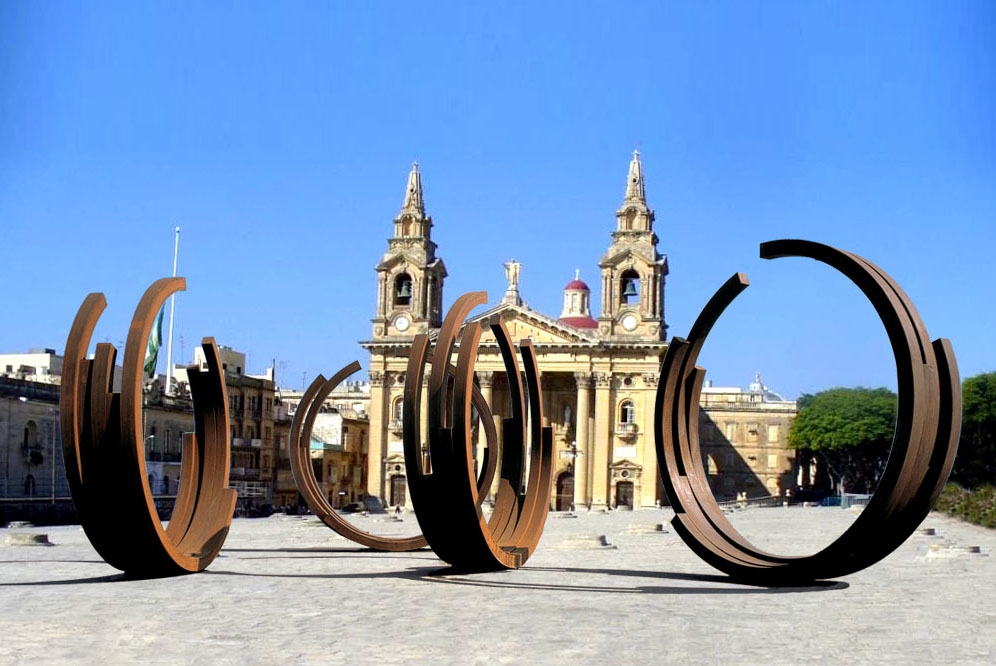
Project proposal for Floriana Granaries (click to enlarge)
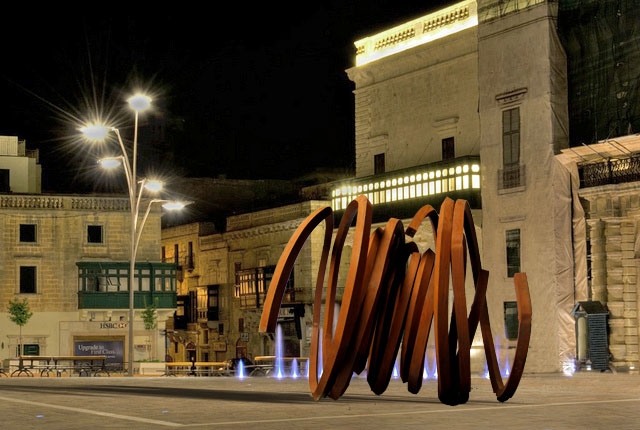
Project proposal for Pjazza San Gorg (click to enlarge)
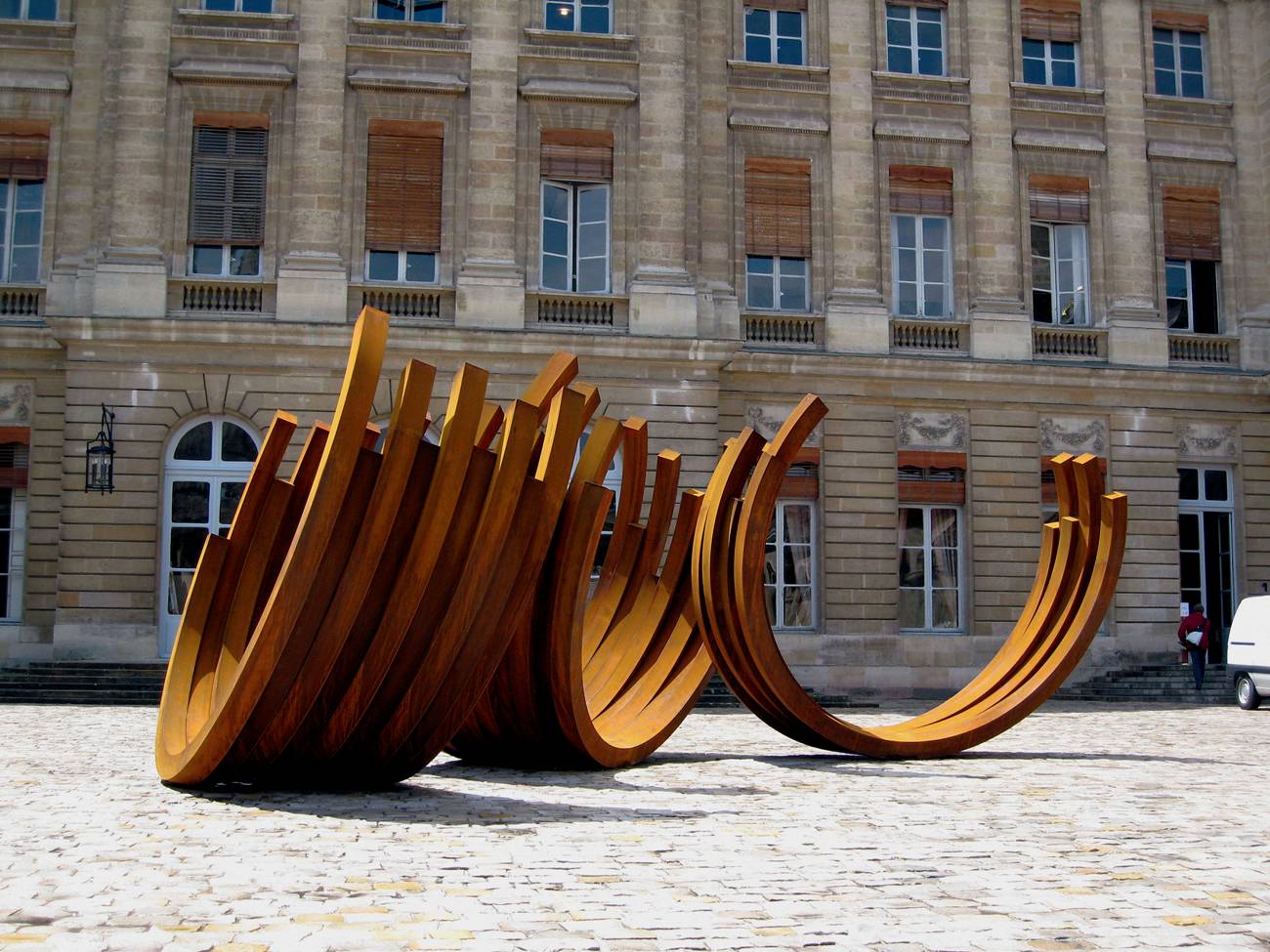
Project proposal for Waterfront (click to enlarge)